DTG printing – the most modern solution in the printing industry
Why Choose DTG Printing?
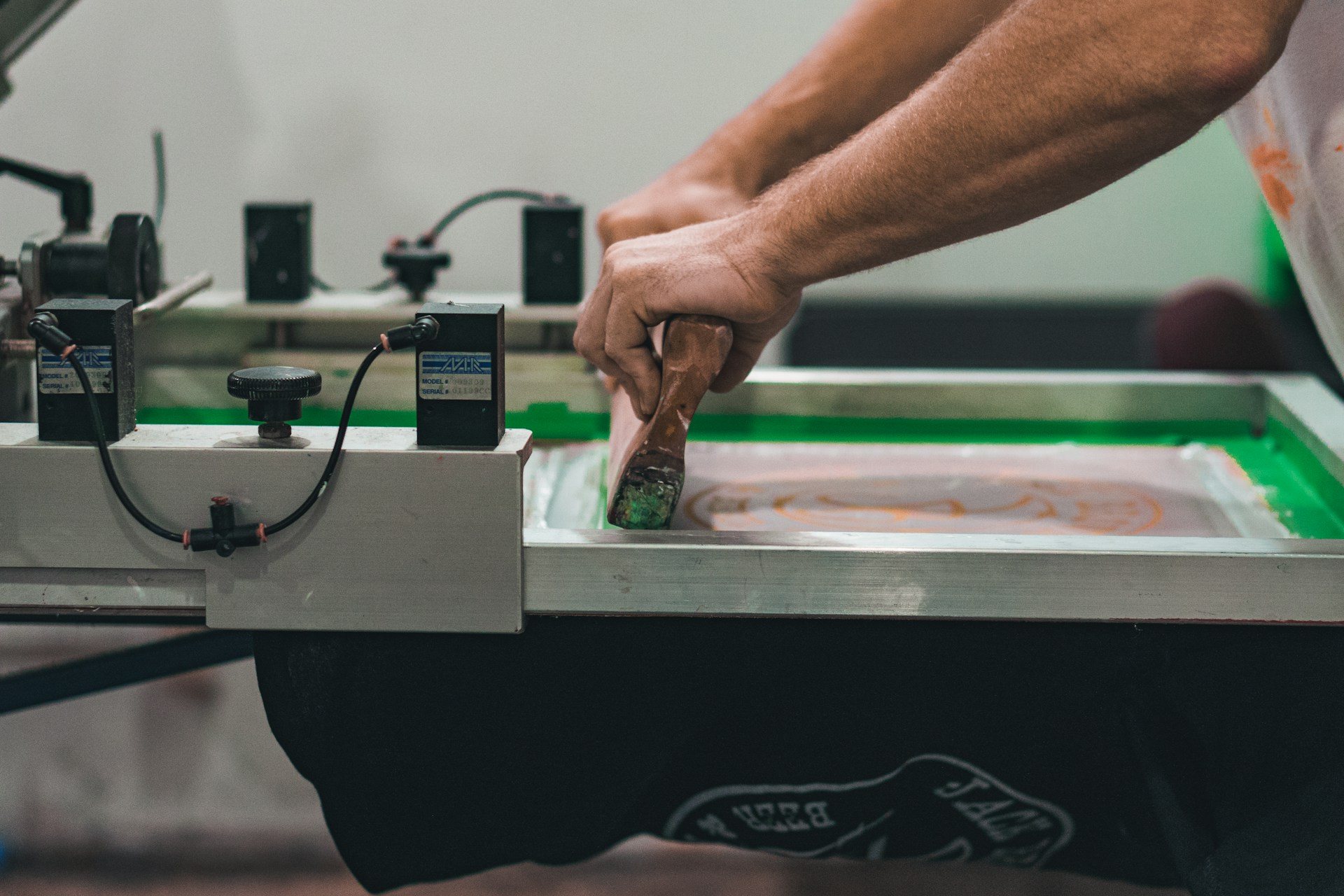
Direct-to-fabric printing offers several advantages. The first ones become apparent as soon as you start designing the pattern. Although there are many printing methods, a drawback of many of them is that they cannot produce highly detailed or colorful designs. With screen printing, for example, one limitation is that only up to four different colors can be used, and with machine embroidery, up to nine different thread colors. A highly detailed final result is impossible. DTG printing imposes no such limitations—the design can be as detailed and rich in color as you could ever dream of.
Another advantage is direct-to-fabric printing itself. Digital printing on fabric does not require the creation of printing screens, for example, which takes quite some time in the screen printing method because a separate screen must be prepared for each color. Clearly, this time investment also drives up the price. Eliminating the need for printing screens makes the process more cost-effective. Digital printing on fabric is therefore particularly well-suited for customers ordering single items or small quantities.
The Largest Direct-to-Fabric Print in Estonia
In most cases, digital printing on fabric is limited to a maximum size of A3. If you’d like direct printing on fabric larger than that, please contact us. Ovision uses state-of-the-art technology, and our fabric printing service offers the largest format in Estonia—42 x 61 cm. We use an industrial printer, which allows us to fulfill even large-volume digital fabric printing orders, and our printing prices are more affordable than those of our competitors.
Years of experience allow Ovision to offer high-quality service. You don’t have to worry about a thing. At the same time, it’s certainly interesting to know how the print ends up on the fabric:
1. Graphic Design – With Ovisioni’s help, you can create exactly the design you want. Direct printing on fabric is also possible with a design created by the customer, but in that case, you must submit a file in the appropriate format, with the correct dimensions, and at a sufficient resolution. If necessary, Ovision can help adapt your existing design to make it print-ready.
2. Setting Up the Printer – Although printing on fabric is done automatically, you still need to specify the amount of ink to use, the fabric color, and the image location.
3. Preparing the Product for Printing – Sometimes it is necessary to pre-treat the fabric to ensure that the print turns out as desired. The product is then placed on a special textured base plate. The purpose of the base plate is to prevent the product from moving, ensuring precise digital printing on the fabric.
4. Printing – The printing speed depends on the size and level of detail of the design, but generally speaking, direct-to-fabric printing takes just a couple of minutes! Compared to many other options, this is a very good result.
5. Drying – Once the digital print has been applied to the fabric, the product goes into a tunnel oven, where the final drying and color fixation take place.

What types of fabric are suitable for DTG printing?
When choosing fabric, make sure it is either 100% cotton or cotton with up to 50% spandex or polyester. These materials are used to make a wide variety of clothing, as well as towels, bags, hats, scarves, and more. Printing on colored fabric may take a little longer and be slightly more expensive. The reason lies in the additional steps required to achieve the desired final result. First, the fabric must be pretreated to prevent the ink from soaking into the fabric too much. Second, the design must be printed with white ink and then with the desired color.
Printing on fabric that has already been made into a finished product means that there are seams, pockets, and zippers. With other printing methods, this can be a problem, but not when you choose digital printing on fabric. Although the print head is extremely close to the fabric, there is no actual physical contact between the fabric and the print head. The ink is sprayed onto the fabric, and the texture of the product is not a concern in this case.
Digital printing on fabric is done with water-based inks. As a result, the inks are eco-friendly, yet direct-to-fabric printing is also wear- and wash-resistant. Truly, there’s no reason not to choose digital printing on fabric.
Similar products
-

YUMA
2,24 € pc / + VAT
View Colors -

SHINE
3,14 € pc / + VAT
View Colors -

SLEEPY
3,84 € pc / + VAT
View Colors -

JETTAG
7,41 € pc / + VAT
View Colors -

WUSIC
15,14 € pc / + VAT
View Colors -

MASKSET
1,60 € pc / + VAT
View Colors -

TONE
11,43 € pc / + VAT
View Colors -

TUONO
26,98 € pc / + VAT
View Colors -

OREBAM
16,83 € pc / + VAT
View Colors -

SILENT
21,83 € pc / + VAT
View Colors -

MUSISOFT C
2,30 € pc / + VAT
View Colors -

YELLOW
21,06 € pc / + VAT
View Colors -

MATIC
11,25 € pc / + VAT
View Colors -

ORETA
11,00 € pc / + VAT
View Colors
Why choose Ovision’s promotional gifts and printing services?
Prompt Response to an Inquiry
We generally respond to inquiries within a few hours to one business day.
Fast delivery times
Delivery times that are up to 50% faster than the industry average, because we ship goods from our central warehouse every day.
High-Quality Solutions
We use the best production equipment and the latest printing materials.
Work Completed
-

Silk-screen printed tote bag for Estonia’s oldest beekeeper 5
-

Silk-screen printed tote bag for Estonia’s oldest beekeeper 4
-

Silk-screen printed tote bag for Estonia’s oldest beekeeper 3
-
Silk-screen printed tote bag for Estonia’s oldest beekeeper, No. 2.
-

A silk-screen-printed tote bag for Estonia’s oldest beekeeper.